Monday, February 7, 2011

Moroccan Beef and Fig Tagine


After weeks of warm sun, winter has returned. This recipe was the result of an effort to stir up warmth and sweetness to combat the bitter cold. The result was this: a blend of aphrodisiacs, rich spices and sweet, sexy figs- quite an appropriate Valentine delight.

For me, Moroccan food reigns above all else; it is my absolute favorite- I love the marriage of complex flavors- saffron, almonds, quinces, paprika, dates, tender meat, rich broths, preserved lemons, green olives, fresh mint, etc.

Saffron is one of the magic elements of Moroccan cooking. In fact, it's one of the most magical things we have going for us, as far as I'm concerned. After all, eating the delicate reproductive organs of a beautiful, violet flower!? How hot is that?


Saffron has a long history as a pigment, a food and a medicine. In Iran, saffron pigments have been found that date back 50,000 years! In ancient Persia saffron was used as a remedy against melancholy and, as such, was offered to divinities, woven into fabrics, strewn across beds, and added to tea. To me, the sweet honey, hay-like scent and the vibrant yellow-orange color are as close to pure sunshine as you can get.

Nicholas Culpepper, the famous, early English herbalist describes saffron as "an herb of the sun...let not above ten grains be given at one time, for the sun, which is the fountain of light, may dazzel the eyes and make them blind". Interestingly, modern science is finding that saffron may stop blindness by protecting the eyes from the direct effects of bright light and retinal stress as well as slowing down macular degeneration. Additionally modern science is confirming the ancient use of saffron as an immune stimulator, reproductive regulator, and general curative.

Buddhist monks adopted saffron-colored robes (died with less-costly turmeric, but meant to invoke the nature of saffron) as a continuation of the practice of honoring deities with this divine substance.

And if all of that doesn't impress you, ponder the idea that one pound of saffron requires 50,000-75,000 flowers!

Another magic ingredient of Moroccan food is preserved lemons. Their salty sourness so wonderfully accents the richness of the meat and the sweetness of the dried fruit. Fortunately they are easy to make- you simply pack fresh lemons with salt and let sit for a month or so, until they are ready to be eaten- peel and all. I definitely recommend using Meyer lemons as their peel is much sweeter and more flavorful. A good recipe is located in Alice Water's book, Chez Panisse Fruit. The recipe can be found here.

INGREDIENTS:

1 lb beef stew meat, cut into 1 inch cubes
1 cup dry red wine, Burgundy or such4 cloves of minced garlic
1/2 teaspoon salt
black pepper

2 tablespoons coconut oil or butter
1 onion, coarsely chopped
1 1/2 cups butternut squash- peeled and cut into 1 inch cubes
1-2 carrots cubed

1 bay leaf
1 tablespoon ground cumin
1 tablespoon ground coriander
1 1/2 teaspoons cinnamon
1/2 teaspoon cardamom
2 teaspoons paprika
1 cup beef broth

1/2 cup dried figs, halved
1/3 cup raisins
1-2 preserved lemons, cut in quarters
  • 3 tablespoons olive oil, divided
  • 1 3/4 pounds beef tenderloin, cut into 1-inch cubes
  • 1 large onion, chopped
  • 1 large carrot, chopped
  • 2 garlic cloves, chopped
  • 1 tablespoon paprika
  • 2 teaspoons ground cumin
  • 1 1/2 teaspoons ground cinnamon
  • 2 cups beef broth

  • Cilantro and or pine nuts to garnish.

    PREPARATION:

    Marinate the beef for several hours or preferably over night in the wine and garlic and salt and pepper.

    Drain the meat and pat dry, but reserve the wine.

    Heat a large, heavy-bottomed pot over high heat. Add one tablespoon of the coconut oil or butter. When very hot, add the meat, in batches if needed (so as to only have a single layer of un-crowded meat in the pan-otherwise the meat will steam, instead of brown). Brown each side of the beef- until it develops a handsome crust of brown- a few minutes for each batch. Remove the meat from the pot.

    Add the rest of the oil or butter to the pan, reduce the heat to medium-high. Add the onions, carrots, and squash to the pan. Cook 10 minutes or so. Add the spices and cook another minute more to release their flavor.

    Then add the wine and beef broth to the pot. Bring to a boil then turn down to the lowest possible heat. Simmer 1 1/2 hours or so with a tight fitting lid. Then add the preserved lemon, figs and raisins- simmer another 1/2 hour. Garnish with pine nuts and/or cilantro. Serve with couscous or quinoa.

    Makes 4 hearty servings of magic to take away your melancholy.

  • 3 tablespoons olive oil, divided
  • 1 3/4 pounds beef tenderloin, cut into 1-inch cubes
  • 1 large onion, chopped
  • 1 large carrot, chopped
  • 2 garlic cloves, chopped
  • 1 tablespoon paprika
  • 2 teaspoons ground cumin
  • 1 1/2 teaspoons ground cinnamon
  • 2 cups beef broth
  • 3 tablespoons olive oil, divided
  • 1 3/4 pounds beef tenderloin, cut into 1-inch cubes
  • 1 large onion, chopped
  • 1 large carrot, chopped
  • 2 garlic cloves, chopped
  • 1 tablespoon paprika
  • 2 teaspoons ground cumin
  • 1 1/2 teaspoons ground cinnamon
  • 2 cups beef broth
  • Saturday, January 29, 2011

    Venetian Carrot Cake


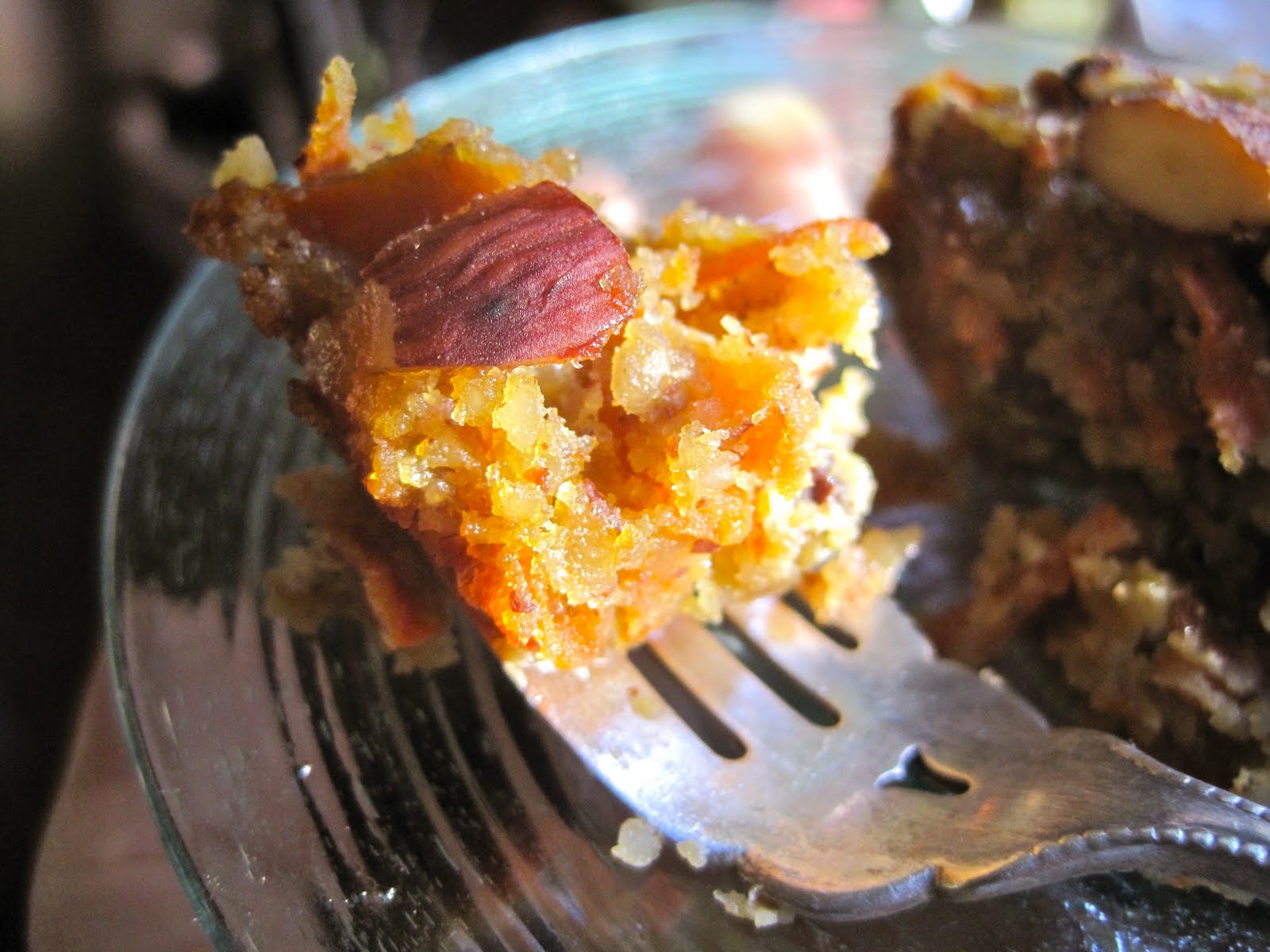
    Carrot cake was originally made in the Middle Ages when sweeteners were expensive and carrots were used as the main source of sweetness. This recipe was inspired by Nigella Lawson's who based her recipe on a traditional cake made by Venetian Jews.

    This carrot cake doesn't have any grains whatsoever so there is room for more of the good stuff. I made this cake recently to share with my fellow herbalists in celebration of finishing our clinical training program. Many people in the class can't eat gluten so this was a good alternative to the traditional model. They loved the cake and asked for the recipe, so this is for them.

    For the cake:

    1/4 cup almonds, chopped coarsely
    2 large carrots
    1/2 cup currants
    2 1/2 oz. rum
    2/3 cup super fine sugar
    1 stick of butter, melted, plus more for greasing
    1 tsp. vanilla extract
    1/4 tsp. almond extract (optional)
    3 free-range eggs
    1 cup ground almonds
    3/4 cup ground sunflower seeds
    ½ tsp ground nutmeg
    1/2 meyer lemon- finely grated zest and juice

    For the mascarpone cream (optional)

    5 oz mascarpone cheese
    2 tsp powdered sugar
    2 tbsp rum

    Preparation:

    Oven to 350*

    Line the base of 8" by 8" pan with parchment paper, grease the sides with butter.

    Toast the 1/4 cup chopped almonds in small pan until golden brown, set aside.

    Grate the carrots then squeeze out extra liquid using a cheese clothe or thin kitchen towel, set aside.

    Heat the currants a small saucepan with the rum, bring to the boil, then turn down and simmer for a few minutes- until soft and plump- then drain.

    Whisk the sugar and melted butter until creamily and airily mixed. Whisk in the vanilla and almond extract and eggs and, when well whisked, fold in the ground almonds and sunflower seeds, nutmeg, grated carrots, and, finally, the lemon zest and juice.

    Scrape the mixture into the prepared pan. Sprinkle the toasted almonds over the cake and put it into the oven for 30–40 minutes, or until the top is risen and golden and a skewer inserted into the center comes out sticky but more or less clean.

    For the mascarpone cream, mix the mascarpone with the icing sugar and rum (feel free to use the rum that the currants cooked in).

    To serve, transfer the cake to a plate. Put the mascarpone cream in a bowl to spoon alongside the cake.

    Considerations:

    -Use 4 1/2 oz. olive oil in place of the butter for those sensitive to diary.
    -Use golden sultanas in place of the currants.
    -Use sour cream in place of mascarpone or use whole plain yogurt.

    Saturday, December 18, 2010

    Chocolate Sea Salt "Nubes"


    Recently I have been mastering the art of dessert-eating- its not a new thing, but somehow I think many of us have lost touch with it. Previously, I made desserts using the most healthy ingredients possible in an attempt to lessen my guilt for eating them. Raw cashew ice cream, quinoa cake, goji berry sweetened whole wheat cookies, etc. While many of these more "health-conscious" recipes were good in a certain way, they didn't usually ever satisfy a deep desire for decadence. In the past it seemed like I was always trying to take dessert out of dessert. In fact, I was famous for making delicious-sounding desserts but forgetting any type of sweetener entirely! Needless to say, those were not much fun.

    I have learned, however, that there is another approach. One that I vastly prefer. This approach generally doesn't involve whole-wheat flour or sugar alternatives. Instead of trying to avoid
    pure, indulgent, refined white goodness, I actually make it my focus! The secret I've discovered to making this approach actually healthier than the previous model, is that when I leave the healthy ingredients out of the dessert, I also have to leave the guilt out.

    If you take away the guilt but keep a recognition that dessert really is a treat, to be enjoyed as such, then you begin to actually appreciate it. Now, when I eat dessert, I really eat dessert!- And I enjoy every single cherished bite.

    The entire world, however, has not caught on to the fact that white crack (that's what a friend of mine calls white sugar and flour) really IS where it's at. So while I wait for the world to catch on to a model Europeans provided us with decades ago, I will keep doing my best to come up with desserts that suit as many people's diets as possible (I DO recognize white crack isn't a good idea for everyone, however.)

    I was recently looking for a gluten-free cookie recipe that did not involve complex flour substitutions, and I came across a recipe for almond macaroons. For this recipe I combined chocolate, hazelnuts, egg whites, sugar and sea salt- that's it. When my friend Ryan tasted them he said they were very much like the Spanish cookies he loved called "nubes"- chocolate, egg-white leavened "clouds".

    These cookies are chewy and very rich- so while they will definitely spike your blood-sugar, you likely will only need to eat one (or maybe two) to feel blissfully satisfied with salty chocolate-ness. Because they are mostly chocolate, the higher the quality of chocolate, the better these will turn out. The salt is a key accent to the chocolate and sugar. They have salt in the batter and they also have coarse salt sprinkled on top. I suggest using a fine sea salt in the batter and a coarse sea salt or Himalayan salt for the top- you might need to crush it a with a mortar and pestle if it's too coarse.

    It's easy to over-cook these cookies so I suggest leaning on the side of under-done so they stay chewy and do not get hard.


    3 cups powdered sugar
    3/4 cup Dutch-process cocoa powder (spooned and leveled)
    1/2 teaspoon sea salt
    5 ounces bittersweet chocolate,
    chopped
    1 1/2 cups finely chopped hazelnuts (or any other type of nuts)
    4 large egg whites, room temperature
    1 tablespoon coarse salt-

    Preheat oven to 325 degrees. In a large bowl, whisk together sugar, cocoa, and salt. Stir in chocolate and pecans. Add egg whites and stir just
    until incorporated (do not over-mix).

    Drop dough by 1/4 cupfuls, 3 inches apart, onto two parchment-lined baking sheets. Bake until cookie tops are dry and crackled, about 25 minutes, rotating sheets halfway through. Transfer sheets to wire racks.

    Enjoy without guilt but perhaps with milk or tea.

    * * *

    As a side-note to my lovely devoted readers out there: please excuse the lack of consistency in up-dating these posts- it was due to my previous dinosaur computer, which finally did me the favor of dying, which freed me up to get myself up-to-date technologically. Thank you for your support!

    Saturday, September 25, 2010

    Avocado Pistachio Raw Milk Ice Cream


    I recently got an ice cream maker and feel like I have fallen into a rabbit hole of frozen possibilities. My first experiment was lavender frozen yogurt. I combined Strauss whole milk yogurt, some delicious wildflower honey, and finely ground French lavender. The result was delicious to my taste (not too sweet), but too tart for others.

    My next endeavor was cinnamon coconut milk ice cream. This ice cream was spicy and sweet from the cinnamon, but the coconut milk flavor still seemed to dominate.

    My third ice cream creation (at this point I seem to be developing a stock-pile), was the best. Pistachio ice cream has always been one of my favorite flavors and I was excited to try it with avocado.

    This recipe is nice because the milk is uncooked- which allows the ice cream to be more easily digested if raw milk is used in the recipe. If you can't purchase raw milk at the store, ask around, often there is someone out there with a cow who is willing to sell or "give" some to you (selling it is technically illegal in parts of California still, although this is changing).

    One of the main reasons to drink raw milk instead of pasteurized milk is that raw milk contains lactase- the enzyme that breaks down lactose- which is the sugar in milk that most people can not digest well after infancy. The reason milk began to be pasteurized is that the conditions in which cows were living became increasingly unsanitary and prone to disease. When cows are raised in green fields with plenty of space, the result is healthy, delicious milk that doesn't need to be cooked to be safe.

    One of the tricks to good ice cream is to have the ingredients as cold as possible and the canister as cold as possible when you pour them in.

    RECIPE:

    *Store all ingredients in fridge until ready to use.

    2-3 avocados- depending on size
    1 tablespoon lemon juice
    zest of 1 lemon
    1 1/2 cups whole, raw milk
    1 cup raw, heavy cream
    1/2 cup honey
    1/2 cup chopped pistachios

    Mix the avocado flesh, lemon juice, zest, milk, cream and honey in a blender until smooth.
    Pour the mix into a frozen ice cream canister. Add the pistachios and process according to the directions.

    Saturday, September 11, 2010

    Bacon and Avocado Stuffed Tomatoes


    The very first thing I thought about when I opened my eyes yesterday morning was how much I wanted a BLT. When I was little we lived on a farm and had BLTs regularly in the summer when the tomatoes were ripe. We also raised our own pigs and our bacon was better than any bacon I've had since. The crispy bacon, fresh tomatoes and lettuce piled between two layers of hearty homemade bread was divine. BLTs were always my favorite and they still are- although I habitually add avocado to mine now and basil too sometimes.


    My BLT craving was still very much on my mind this morning at the farmer's market as I picked out some amazing bright green zebra tomatoes. When I got home, however, my plan evolved somewhat. I fried up the bacon and crumbled it into a bowl. Then I added an avocado cut into pieces, some finely minced red onion, some shredded basil, and some Bulgarian sheep feta. Then I hollowed out the tomatoes and filled them with the avocado-bacon mixture. That was is it. Not exactly BLTs, but delicious, nonetheless.


    Bacon and Avocado Stuffed Tomatoes

    These are pretty rich and filling so plan on one tomato per person as an appetizer.

    4-5 smallish, round tomatoes of any kind- avoid varietals with very thin skin
    a small handful of basil
    1/3 cup feta*
    1 avocado
    3 strips bacon
    3 tablespoons finely chopped red onion
    1/2 teaspoon salt (taste before adding- some feta is salty enough you might not need salt)


    Fry the bacon until crispy, then set aside on paper towels to cool.

    Cut the tops off the tomatoes, making an opening big enough for a small teaspoon to fit in. Then hollow out the insides of the tomatoes. Once hollowed out check to see if they will sit upright on a plate, if not, carefully slice as little as possible off the bottom to make a flat surface- be careful not to cut too deeply or the tomatoes will leak.

    Cut the avocado in half and then into 1/2 inch cubes. Add the avocado to a bowl. Finely chiffonade the basil by rolling the leaves tightly together and and chopping them as thinly as possible. Add the basil to the avocado along with the chopped red onion, then crumble the bacon and feta into the bowl as well. Mix the ingredients as lightly as possible so as not to turn the avocado to mush. Taste; if it needs salt add a pinch or so and mix again.

    Stuff the tomatoes with the mix and refrigerate until ready to serve.

    * Note: Bulgarian sheep feta is delicious and usually quite inexpensive- if you haven't tried it, look for it in specialty markets and cheese shops.

    Saturday, August 14, 2010

    Sunflower Butter Crackers

    I've been looking for a good cracker recipe for a while now- a cracker that is utterly buttery, flaky and delicious- almost like savory shortbread with lots of nuts and seeds. I also wanted to find one that was wheat free. I happened upon a recipe on the back of a package of rye flour and was inspired. I altered the recipe a good bit, and the result was just what I was looking for.

    I topped the crackers with paprika, but I think I would just use some coarse sea salt in the future. Also, I would like to try this recipe again with sesame or pumpkin seeds in place of the flax and sunflower seeds, which were just what I happened to have on hand.


    Sunflower Butter Crackers

    1/4 cup flax seeds, ground
    1/4 cup sunflower seeds, ground
    1/2 cup white spelt flour
    1/2 cup dark rye flour
    1/2 teaspoon salt
    1 tablespoon unrefined sugar
    1/2 teaspoon baking powder
    1/2 teaspoon baking soda
    1/2 teaspoon ground coriander

    4 tablespoons chilled butter, cut into pieces
    3 tablespoons buttermilk

    Grind the flax seeds and sunflower seeds in a food processor or blender until ground. Add the ground seeds to a medium bowl and add the rest of the dry ingredients and mix well.

    Work in the butter with your fingers until well incorporated.

    Stir in the buttermilk and form into a ball. Roll out the dough between two pieces of wax paper until 1/8 inch thick. Cut into desired shapes. Prick with a fork, dust lightly with salt or paprika and transfer to an ungreased cookie sheet.

    Bake 7-10 minutes until lightly browned on edges. Cool on a rack.

    Saturday, July 31, 2010

    Sweet Miso Eggplant


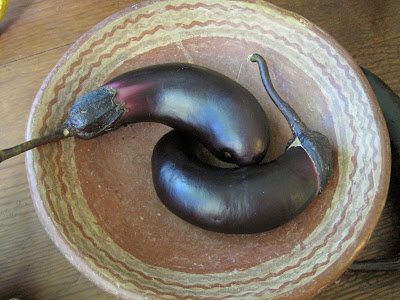
    I picked up some beautiful small eggplants at the farmers' market this morning. They were so beautiful I had a hard time cutting into their tender, black flesh. The small Japanese eggplants are my favorite- sweeter and more tender than the usual Globe varietals commonly found. The skin of the smaller varietals is usually tender enough to eat, which is good because most of nutrients in eggplants are found in the skin- potassium, B-vitamins and phytonutrients.

    I found this recipe in one of my favorite Japanese cookbooks, Harumi's Japanese Home Cooking. Her book is simple and elegant, which this recipe perfectly exemplifies.

    Nasu dengaku is the Japanese name for this dish. "Dengaku" is a sweet, simmered miso sauce that is traditionally used to coat grilled meat and vegetables.


    Eggplant "Dengaku" Style
    Serves 2

    6 tablespoons miso (hatcho or red)
    4 tablespoons sugar
    4 tablespoons mirin
    2 tablespoons sake
    1 large globe eggplant or 4 small, long eggplants
    3 tablespoons sunflower or other high-heat oil
    toasted sesame seeds

    To make the dengaku: mix the miso, sugar, mirin and sake in a small pan over medium heat. Stir for a few minutes to combine and thicken. Turn off heat.

    Cut the eggplant or plants in half lengthwise and then run a knife around the
    inside of the eggplant, loosening the skin from the flesh. Score the surface of the eggplant a few times with a knife.

    Heat the oil in a frying pan and add the eggplant, flesh side down, and brown. Then turn over, loosely cover and continue cooking until almost cooked.

    Spread the dengaku miso on each half the eggplant. Cook under the broiler or on a hot grill for about 5 minutes.
    Sprinkle with toasted sesame seeds.

    Eat with a spoon.

    Choosing an Eggplant
    In choosing an eggplant there are a few things to look for. Often eggplants are sold overripe and old. Eggplants don't store for very long, so look for the freshest ones you can find. Whatever the variety, smaller eggplants are generally better. Choose eggplants that are firm and heavy for their size. As an eggplant ages it gets puffy and bitter. You can test this by gently pushing with your thumb- if the flesh gives slightly but bounces back, it is ripe. If the indentation remains then it is overripe, and it will likely be mushy inside. If it doesn't give, it was picked too early and is unripe.