Saturday, October 20, 2012

Warm Caraway Cabbage


When the first rains comes each year it's only a matter of days before I begin to crave braised cabbage.  The sweetness of the apples, the tartness of apple cider vinegar and the aromatic, comforting quality of caraway tend to perfectly satisfy the first autumn chill- especially when accompanying sausage.

Caraway is a traditional spice used throughout the ages for various maladies. The ancient Arabs brought caraway to Europe where it became popular as a culinary spice and as a a digestive aid- chewing the seeds well after a meal to release their stimulating aromatic oils helps relieve indigestion. For this reason, caraway became a common ingredient in aperitifs.  As a side note, caraway was also traditionally used in love potions as it was believed to keep lovers from turning fickle!

My version of this traditional German dish includes fresh apple cider and maple syrup, other than that, it's fairly basic. Go for onions on the sweeter side if you can- cipolline or red.

Warm Caraway Cabbage 
  • 1 large onion, sliced
  • 2 tablespoons unsalted butter
  • 1 1/2 tablespoons caraway
  • 1 head of red cabbage (medium sized), sliced thinly 
  • 1-2 tart apples- peeled, cored, and chopped
  • 1 cup freshly juiced apple cider (use store-bought if you don't have a juicer)
  • 1/3 cup apple cider vinegar
  • 1 teaspoon sea salt
  • 1/4 cup maple syrup
In a heavy-bottomed pot sauté the onion in butter over medium heat until soft and beginning to brown. Add the caraway seeds and cook a few minutes more to release the aromatics of the caraway.

Add the rest of the ingredients and bring to a boil. Simmer covered for about a half hour, stirring periodically. Then remove the lid and simmer twenty minutes more. 


Saturday, January 21, 2012

Lemon and Piñon Brussels Sprouts

Butter binds toasted pine nuts with the sweetness of shallots, the bitterness of Brussels sprouts and the brightness of Meyer lemon. In other words, this is delicious and I can't stop making it. Its the perfect winter accompaniment to fried eggs or roast chicken.

Pine nuts are a bit of a buzz word these days not only because of their amazing taste, but also because their prices have soared- largely due to the difficulty in extracting these tasty little seeds. Nestled deep inside all pine cones are edible seeds- most of them are too small to bother extracting though.

I have a friend who gathers his own pine nuts- but he tells me its a labor of love; the price you pay at the store is a bargain compared to the work involved in harvesting them. The harvesting process involves heating the cones to encourage them to relinquish the seeds- which are covered in an extremely hard shell. Then the shells are rolled or beaten to break free the delicate seed inside.

Pine nuts are an ancient food- a staple for Native Americans- who ground them into flour, as well as the Greeks and Romans who included them in their regular diet, as well as prescribed them as a sexual potency tonic. Pine nuts high protein and vitamin content give this idea validity. Higher in protein than any other nut or seed, pine nuts also provide large quantities of valuable vitamin E and D- two very needed vitamins in the average diet.

Recipe: serves 2- 4

1/3 cup pine nuts
1 pound Brussels sprouts- washed and trimmed of any bad leaves and then sliced very thinly
1 shallot- minced
1 Meyer lemon- the zest sliced off and finely minced, the inside juiced- set aside.
4 tablespoons butter
sea salt and freshly coarse ground pepper
few tablespoons chopped parsley

Toast the pine nuts in a dry skillet over medium-low heat- just until they release their sweet fragrance and are slightly browned. Pour the pine nuts into a bowl and set aside.

Add the butter to the pan- allow it to melt completely. Then add the minced shallot and cook five minutes or so. Add the Brussels sprouts, salt and freshly cracked pepper. Cook five minutes or so more- not stirring too often to allow the Brussels sprouts to brown slightly. But not so long that they lose their vibrant color.

Just before serving add the parsley, lemon juice (to taste- you might not need all of it), the zest, and, of course, the pine nuts.

Saturday, November 5, 2011

Yogurt Cheese

I have been wanting to share this for a long time. Its so unbelievably easy and versatile, not to mention, delicious. Straining yogurt removes the whey. Depending on how long you let the yogurt sit will determine its thickness: a few hours will give a Greek yogurt consistency while sitting overnight or longer will create a tangy cream cheese consistency.

Aiming to eat fermented foods with every meal, or at least once a day, is one of the simplest ways to drastically improve digestion. The whey that is removed can be added to fermented foods such as sauerkraut to increase the range of healthy bacteria. The cheese itself is amazing mixed with honey or garlic and herbs. It is a great source of healthy bacteria, protein, and calcium.

To make the yogurt cheese simply add a quart of full fat yogurt to a thin cloth or several layers of cheese cloth laid over a strainer. Alternatively, you can gather the cloth around the cheese, tie with a rubber band and suspend over a bowl to collect the whey.

Let sit over night until about half of the volume is strained out in whey. Pour the whey into a jar to use later. Store the cheese in an airtight container or follow the traditional Greek method of rolling it into small balls, and then covering them with olive oil and chopped herbs.


Wednesday, September 7, 2011

Blackberries with Cacao Nib Cream

Blackberries are in full effect here, and I imagine, almost everywhere else. Along roads, and rivers and backyards; their bounty is unavoidable. Most of the year the brambles are unwelcome invaders: stealing valuable garden space at an unfathomable rate. But around this time, their dominating nature returns some of its yield.

I love sinking into world of the bramble, the intimacy that is created as my attention focuses on the task at hand. If I am with other people, I love how their voices quickly become faint- overwhelmed by the hum of bees and the density of foliage as we wind ourselves deeper and deeper between canes covered in thorns to reach the biggest, ripest berries.

Blackberries give back as much with flavor as they do with nutrients. Besides being rich in fiber, and Vitamins C and A, blackberries are filled with phenolic acids which are antioxidants known to be anti-carcinogenic.

Traditionally, blackberries have been used by both Native Americans as well as Europeans, (although they were originally using different varieties). In Europe, blackberry juice was used to treat infections of the mouth and eyes until the 16th century. Today blackberry root tincture is used an effective remedy against diarrhea.

Folklore in Ireland and Great Britain says that blackberries should not be picked after St. Michaelmas Day, October 10th. It is believed that on this day, the Devil was expelled from Heaven. He fell from the sky into a blackberry bramble and cursed the fruit- scorching them with his breath and making them unfit for consumption (other versions of the story say he peed on the berries). There is some value behind this legend as wetter and cooler weather often allows the fruit to become infected by various bacteria and molds- making them potentially harmful.

Cacao nibs are also full of minerals and antioxidants- being the mostly unprocessed pieces of the cacao bean. They are available mostly in the roasted form but can also be purchased raw- which will retain more of their anti-oxidant properties. It exhausts me to imagine trying to relate all the health benefits of chocolate, and given that it has gotten so much press recently, I am not going to. Just know that chocolate is really, really frickin' good for you (in its whole state, of course, we're not talking Hershey's here).


Here's the very simple recipe:
(serves 4)

3-4 cups blackberries: freshly picked- still warm from the sun is always nice
1/2 pint whipping cream
1/4 cup cacao nibs
1/2 teaspoon vanilla or chocolate extract
2-6 tablespoons of sugar (depending on the sweetness of the berries and your taste)

Whip the cream- but don't over-whip it. I always use a hand beater for this because its too easy to over do it with an electric one.

Add the sugar, vanilla or chocolate extract, and nibs.

Serve over the berries.

Sunday, August 21, 2011

Redcurrant and Strawberry Wedding Cake


I have been busy; I walked across Spain (most of it, anyway).

I did the Camino of Santiago- a walk that starts in the French Pyranées and ends up at the Atlantic Ocean- 500 or so miles later. It was amazing, to say the least.


I returned from Spain to attend the wedding of a beloved friend on the Sunshine Coast of British Colombia. When I heard they planned to not have a cake, part of me rebelled. I decided to override the plan.


I aimed to make a cake that avoided the things most people dislike about cake- overly sweet, unbalanced, and a dry, boring texture.


To find a recipe for the cake I searched the family’s massive collection of cookbooks. The Rombauers pulled though, yet again, with this wonderful Génoise cake recipe in the Joy of Cooking. The authors of The Joy define the Génoise cake as, “the layer cake of Europe, an unleavened whole-egg sponge cake with a delicate butter flavor.”


An abundant redcurrant bush was beckoning to have its fruit enjoyed, so I decided to make a cake that would feature the fruit. I added strawberries to the redcurrants to mellow their intensity, and to balance the sweet brightness of the fruit I filled the cake with a cream filling.


Redcurrants are rare in the U.S which is unfortunate because they are delicious and amazingly rich in vitamin C (four times more than oranges) and antioxidants. Look and ask for them at farmer’s markets or grow your own if you have the space. And as a side note- the dried currants easily found in commerce are not true currants at all, but actually a small raisin- not the same at all.


Between the layers of cake is a not-too-sweet strawberry and goat cheese frosting. The cake is topped with a strawberry cream. Keeping the fruit raw maintains the antioxidants and vitamin C that would be destroyed in cooking. Serve the fruit on the side or atop the cake just before serving.


This original recipe serves 10. For the wedding cake I doubled the recipe twice and used big baking sheets- avoiding having to split the cake to make the layers.


Génoise Cake

Makes two 1 inch layers.


Have all ingredients at room temperature and preheat the oven to 350*

Grease and flour the sides of two 9 X 2 inch round pans and line the bottom with parchment paper.


Sift together 3 times (I know this seems excessive but think of it as a ritual of love):

1 ¼ cups sifted cake flour (more sifting)

¼ cup sugar


Melt in a saucepan:

1/3 cup butter (preferably clarified)


Whisk together in a large heatproof bowl:

6 large eggs

¾ cup sugar


Set the bowl in a skillet of barely simmering water and whisk constantly until the mixture is warm to the touch, but be careful not to get too hot. Remove the bowl from the heat and beat on high speed until the mixture is light colored, has tripled in volume, and is the consistency of softly whipped cream (about 15 minutes with a hand-held mixer or 5 minutes with a heavy duty one).


In 3 additions, sift the flour mixture over the top and fold in with a rubber spatula. Reheat the butter until it is hot and transfer to a medium bowl. Fold into the batter with a rubber spatula until completely incorporated about 1 ½ cups of the egg mixture along with:

1 teaspoon vanilla


Scrape the mixture into the remaining egg mixture and fold in. Scrape the batter into the pans and spread evenly. Bake until the bake begins to pull away from the sides of the pans and tht top springs back when lightly pressed, about 15 minutes. Let cool in the pans 10 minutes. Slide a thin knife around the cake to detach it from the pans; invert the cakes remove the liners. Let cool right side up on the rack.


The Cake Filling:

6 oz cream cheese (cold)

8 oz chevre (cold)

2 teaspoons vanilla

½ cup very ripe, finely chopped, very ripe strawberries


Beat with a mixer until blended and smooth.


Add slowly, mixing between additions:

1 ½ cups powdered sugar- or to taste. Add in half cup increments and taste as you go. You want the mixture to be thick but not too sweet. Divide the mixture in half.


Beat until peaks form:

½ pint of heavy whipping cream.


Gently fold the whipped cream into half of the filling mixture. This is for the top of the cake. Add more strawberries if you prefer stronger color and flavor- be careful not to get the topping too runny.


The Fruit:


12 oz strawberries, sliced

8 oz redcurrants

a few tablespoons of sugar


Gently mix the fruit and sugar together. Pour off a quarter cup or so of the juice into a small pot. Add and whisk to combine while cooking over medium-high heat until thickened:

3 teaspoons cornstarch


Remove from the heat and stir into the berries.


When the cake layers are completely cool spread the thick filling mixture over the middle and sides of the cake. Just before serving spread the soft cream filling over the top. Top the cake with roses or sliced strawberries. Spoon the fruit on the side of each plate.


Monday, April 11, 2011

spring egg salad


This salad uses peas, eggs and tons of herbs. It is fresh and vibrant- a step away from the average mayonnaise-laden egg salad (notice I didn't say "a step up"- that version can be good as well).

Cilantro, parsley, dill, chives, savory---use any fresh herbs you have on hand and use lots of them. I like to use fresh herbs with abundance, more like a main ingredient rather than something carefully measured. It helps to grow your own so that you have an abundant supply always on hand. Herbs are filled with vitamins and minerals, and most aid digestion, which helps more of the nutrients in food actually get absorbed.


Fresh meyer lemon peel is a staple ingredient in my kitchen. It enhances digestion as well as immune function because it is filled with vitamin C and anti-oxidants. From a Chinese medicine standpoint it acts as a blood-mover- basically it gets things circulating- which helps detoxification and cardiovascular health. But most importantly it lends a wonderfully bright flavor. Meyer lemons, as opposed to other varieties of lemon- such as the more common, Eureka lemon, are much more complex in flavor and less intensely sour. Additionally, they are usually more juicy; always look for the really squeezable ones.


Recipe:

4 hard-cooked eggs, peeled and coarsely chopped
1 cup peas- fresh shelled or frozen and thawed
large handful of herbs- parsley, mint, cilantro, dill etc.
3 scallions, chopped
3 tablespoons capers, chopped or whole
2 tablespoons lemon juice
1 tablespoon finely minced meyer lemon peel
salt and lots of pepper

Combine all ingredients and stir gently.


A note on eggs...

I try to use the best quality eggs I can find- the freshest and most free-range. The best measure of an egg's quality is the depth of color of the yolk. Pale yolks mean little nutritional value- and to me, they just look and taste less alive.

Farm eggs (not store bought) can be kept at room temperature- in fact they last longer and stay fresher this way. As long as an egg has never been washed or refrigerated- there is a protective coating on the shell that keeps it stable at room temperature for several months.

The trick for a perfectly hard-boiled egg is to not over-cook it. When over-cooked, yolks turn chalky and develop a blue coating.

The technique for perfectly hard-cooked eggs is to place the eggs in a pot and cover with cold water by at least an inch. Bring the water just to a rolling boil over medium-high heat, then immediately turn off the heat. Cover and let sit for 15 minutes. Remove the eggs from the water.

To peel, lightly tap the entire egg to crack the entire shell. Then under cold, running water remove the shell.

Wednesday, April 6, 2011

Red Pepper and Hemp Heart Tapanade


Recently I have been loving making dips and sauces to have on hand so that I have quick ways of dressing up vegetables, meat dishes and crackers. Often store-bought dips- even the ones with enticing packaging are filled with not so enticing ingredients; low quality oils and filler ingredients are what allow companies to make profit. I like to make my own condiments because then I can fill them with healing ingredients; they become my medicine-delicious ways to increase my intake of herbs, good quality fats, sea vegetables, fiber, minerals, etc.

My aim in this dish was to create a good dose of essential fatty acids from hemp seeds. Essential fatty acids, also known as Omega 3 and 6, are essential for most of the body's fundamental processes such as metabolism, brain function etc. Most diets are higher in Omega 6 than Omega 3 (a good ratio is one part omega 3 to five parts omega 6. Most people have a ratio closer to 1:20 ) which results in various illnesses such as depression and inflammation.

Hemp hearts are a wonderful food because not only do they have the appropriate ratio of essential fatty acids, but they are also very are high in fiber and protein. Their high fat and protein content gives a greater sense of satisfaction after meals making them an excellent food for people wanting to balance blood sugar or lose weight.

Another benefit of hemp hearts is that they are easily digested, and are usually even beneficial for people who have an intolerance to other nuts and seeds.

The one thing to keep in mind is that hemp oil goes rancid quickly, so hemp hearts should be stored in the refrigerator and bought in small quantities.

I first made this recipe as it is. The second time I made it, I added cream cheese- which was delicious, but not exactly award-winning visually- the dark olives, red pepper and white cream cheese made it a rather unsightly color- although both versions were quite tasty- your choice.

I don't own a food processor; this isn't a confession or a boast, it's simply a fact. Sometimes I wish I did, but generally, I enjoy putting a little extra love into my food. This recipe would be made even easier with the use of some mechanical help, although it's pretty easy as it is.


RECIPE:

3 roasted red peppers*

1/2 cup hemp hearts

2 tbsp minced red onion

1/2 cup kalamata olives

juice of half a lemon

zest of half a lemon

2 cloves garlic

salt and pepper

Mince all ingredients and combine well. Alternatively, use a food processor. Enjoy on crackers, sliced cucumber, steak, etc.

*Conventional bell peppers are one of the most heavily sprayed crops- always go for organic on this one. I get the jarred roasted bell peppers- they may seem expensive, but usually there are quite a few peppers packed in each jar. If you want to roast your own, you can simply hold a bell pepper over an open gas flame, rotating until the skin is slightly charred.

Friday, March 11, 2011

Snow-Melting Turmeric Pickle


This recipe is raw, tangy, enzyme-rich, highly nutritious and cleansing. Most people are primarily familiar with turmeric in its dried, powdered form, but, increasingly, the fresh root is available in general markets- it looks very much like ginger, its close cousin, but the color and flavor are markedly different. Fresh turmeric has an ethereal quality, unlike any other flavor- peppery, bitter, and slightly reminiscent of orange- it's quite transporting.

For thousands of years cultures in the East have used turmeric as a potent and delicious medicine. It is a main spice in dishes throughout Asia such as curries, chutneys, and tagines. Turmeric tea is a staple beverage of the Okinawans- who also, perhaps un-coincidentally have the highest life-span in the world.

It is only relatively recently that turmeric has made its way into the Western diet. And there it has generally stayed relatively on the periphery- added in modest quantities to curry and to mustard. But increasingly, people are turning to turmeric as a preventative and potential cure for things like arthritis, inflammation, skin problems and even cancer and dementia.

Turmeric helps the body detoxify by stimulating bile production from the gallbladder and helping to cleanse and protect the liver. Because of its assistance to the body’s detoxifying methods, turmeric is often used to help treat acne, arthritis, heavy metal toxicity, high cholesterol etc.

Chinese medicine and Ayurveda both use turmeric to treat liver disorders- everything from hangovers to jaundice. In Ayurvedic medicine turmeric is referred to as "the great detoxifier". It is used internally to combat dangerous bacteria from food poisoning as well as to drain excess “kapha”- or damp, cold, sluggish states of the body- such as excess mucus. This time of year kapha excess is rampant as the warm spring sun begins to drain the accumulation of cold dampness in the body (think of snow melting after winter).

Turmeric works primarily by reducing inflammation in the body, which helps neutralize the effects of the stressful, and inflaming Western lifestyle and diet. The active agent in turmeric is curcumin- a powerful antioxidant now proven to have anti-cancer and anti-inflammatory effects. Curcumin has shown to strengthen cell membranes and boost resistance to infection.

Traditionally in India mothers slather a paste of powdered turmeric on every cut or wound that appears in front of them and modern studies have shown that turmeric is an excellent disinfectant.

Interestingly, studies have shown that turmeric is more available to the body when it is combined with black pepper. Black pepper contains piperine- a compound that helps increase absoption and bioavailability of curcumin.

Learning about the health benefits of turmeric, I was looking for a way to use fresh turmeric and came across several variations of this traditional pickle. This is a potent relish that adds spice, pungency and tang. It would be delicious on soup or curry, but also on eggs, rice or meat.

There are many ways this recipe could be altered- more jalapeno, cilantro perhaps, or toasted cumin or fenugreek would be nice.

Another option for this recipe is to lacto-ferment it. By adding a few teaspoons of whey to the finished recipe and leaving the relish covered and in a warm place for a few days to allow the lacto-bacilli to grow, the recipe adds beneficial bacteria as well as having the additional benefit of keeping much longer.

RECIPE:

(I wrote out the weight for the ginger and turmeric ratios so that you get an exact proportion, however, feel free, as always, to adjust to your taste)

1/4 lb fresh turmeric root
.1 lb fresh ginger (or about 3-4 inches)
1 jalapeno pepper, deseeded and finely minced
1-2 limes (depending on how juicy they are)- zest and juice- only the green part, avoid the bitter white pith
1 tablespoon raw honey
1 tablespoon coriander seed
black pepper
sea salt
2 tsp. whey (optional)

Lightly heat coriander seeds in a heavy skillet until fragrant- set aside. Grate turmeric- I don't bother to peel it, but be careful, as it will stain everything from your clothes to your skin bright yellow (the color of monk's robes and a symbol of prosperity)

Finely mince or grate ginger. Mix everything together in a bowl.
Let sit for several hours before serving. It will keep for at least a week or so in the fridge.


Monday, February 7, 2011

Moroccan Beef and Fig Tagine


After weeks of warm sun, winter has returned. This recipe was the result of an effort to stir up warmth and sweetness to combat the bitter cold. The result was this: a blend of aphrodisiacs, rich spices and sweet, sexy figs- quite an appropriate Valentine delight.

For me, Moroccan food reigns above all else; it is my absolute favorite- I love the marriage of complex flavors- saffron, almonds, quinces, paprika, dates, tender meat, rich broths, preserved lemons, green olives, fresh mint, etc.

Saffron is one of the magic elements of Moroccan cooking. In fact, it's one of the most magical things we have going for us, as far as I'm concerned. After all, eating the delicate reproductive organs of a beautiful, violet flower!? How hot is that?


Saffron has a long history as a pigment, a food and a medicine. In Iran, saffron pigments have been found that date back 50,000 years! In ancient Persia saffron was used as a remedy against melancholy and, as such, was offered to divinities, woven into fabrics, strewn across beds, and added to tea. To me, the sweet honey, hay-like scent and the vibrant yellow-orange color are as close to pure sunshine as you can get.

Nicholas Culpepper, the famous, early English herbalist describes saffron as "an herb of the sun...let not above ten grains be given at one time, for the sun, which is the fountain of light, may dazzel the eyes and make them blind". Interestingly, modern science is finding that saffron may stop blindness by protecting the eyes from the direct effects of bright light and retinal stress as well as slowing down macular degeneration. Additionally modern science is confirming the ancient use of saffron as an immune stimulator, reproductive regulator, and general curative.

Buddhist monks adopted saffron-colored robes (died with less-costly turmeric, but meant to invoke the nature of saffron) as a continuation of the practice of honoring deities with this divine substance.

And if all of that doesn't impress you, ponder the idea that one pound of saffron requires 50,000-75,000 flowers!

Another magic ingredient of Moroccan food is preserved lemons. Their salty sourness so wonderfully accents the richness of the meat and the sweetness of the dried fruit. Fortunately they are easy to make- you simply pack fresh lemons with salt and let sit for a month or so, until they are ready to be eaten- peel and all. I definitely recommend using Meyer lemons as their peel is much sweeter and more flavorful. A good recipe is located in Alice Water's book, Chez Panisse Fruit. The recipe can be found here.

INGREDIENTS:

1 lb beef stew meat, cut into 1 inch cubes
1 cup dry red wine, Burgundy or such4 cloves of minced garlic
1/2 teaspoon salt
black pepper

2 tablespoons coconut oil or butter
1 onion, coarsely chopped
1 1/2 cups butternut squash- peeled and cut into 1 inch cubes
1-2 carrots cubed

1 bay leaf
1 tablespoon ground cumin
1 tablespoon ground coriander
1 1/2 teaspoons cinnamon
1/2 teaspoon cardamom
2 teaspoons paprika
1 cup beef broth

1/2 cup dried figs, halved
1/3 cup raisins
1-2 preserved lemons, cut in quarters
  • 3 tablespoons olive oil, divided
  • 1 3/4 pounds beef tenderloin, cut into 1-inch cubes
  • 1 large onion, chopped
  • 1 large carrot, chopped
  • 2 garlic cloves, chopped
  • 1 tablespoon paprika
  • 2 teaspoons ground cumin
  • 1 1/2 teaspoons ground cinnamon
  • 2 cups beef broth

  • Cilantro and or pine nuts to garnish.

    PREPARATION:

    Marinate the beef for several hours or preferably over night in the wine and garlic and salt and pepper.

    Drain the meat and pat dry, but reserve the wine.

    Heat a large, heavy-bottomed pot over high heat. Add one tablespoon of the coconut oil or butter. When very hot, add the meat, in batches if needed (so as to only have a single layer of un-crowded meat in the pan-otherwise the meat will steam, instead of brown). Brown each side of the beef- until it develops a handsome crust of brown- a few minutes for each batch. Remove the meat from the pot.

    Add the rest of the oil or butter to the pan, reduce the heat to medium-high. Add the onions, carrots, and squash to the pan. Cook 10 minutes or so. Add the spices and cook another minute more to release their flavor.

    Then add the wine and beef broth to the pot. Bring to a boil then turn down to the lowest possible heat. Simmer 1 1/2 hours or so with a tight fitting lid. Then add the preserved lemon, figs and raisins- simmer another 1/2 hour. Garnish with pine nuts and/or cilantro. Serve with couscous or quinoa.

    Makes 4 hearty servings of magic to take away your melancholy.

  • 3 tablespoons olive oil, divided
  • 1 3/4 pounds beef tenderloin, cut into 1-inch cubes
  • 1 large onion, chopped
  • 1 large carrot, chopped
  • 2 garlic cloves, chopped
  • 1 tablespoon paprika
  • 2 teaspoons ground cumin
  • 1 1/2 teaspoons ground cinnamon
  • 2 cups beef broth
  • 3 tablespoons olive oil, divided
  • 1 3/4 pounds beef tenderloin, cut into 1-inch cubes
  • 1 large onion, chopped
  • 1 large carrot, chopped
  • 2 garlic cloves, chopped
  • 1 tablespoon paprika
  • 2 teaspoons ground cumin
  • 1 1/2 teaspoons ground cinnamon
  • 2 cups beef broth
  • Saturday, January 29, 2011

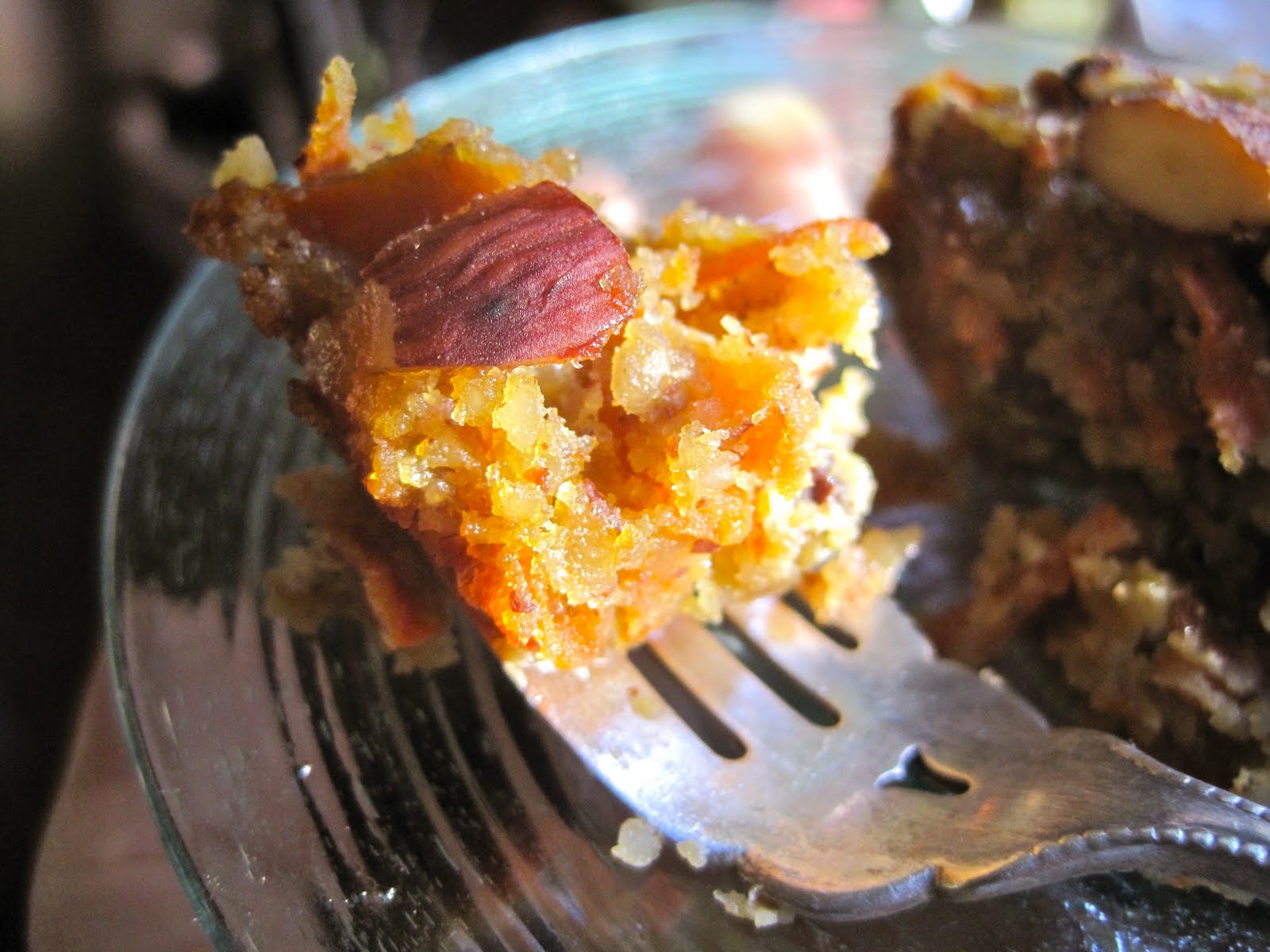
    Venetian Carrot Cake


    Carrot cake was originally made in the Middle Ages when sweeteners were expensive and carrots were used as the main source of sweetness. This recipe was inspired by Nigella Lawson's who based her recipe on a traditional cake made by Venetian Jews.

    This carrot cake doesn't have any grains whatsoever so there is room for more of the good stuff. I made this cake recently to share with my fellow herbalists in celebration of finishing our clinical training program. Many people in the class can't eat gluten so this was a good alternative to the traditional model. They loved the cake and asked for the recipe, so this is for them.

    For the cake:

    1/4 cup almonds, chopped coarsely
    2 large carrots
    1/2 cup currants
    2 1/2 oz. rum
    2/3 cup super fine sugar
    1 stick of butter, melted, plus more for greasing
    1 tsp. vanilla extract
    1/4 tsp. almond extract (optional)
    3 free-range eggs
    1 cup ground almonds
    3/4 cup ground sunflower seeds
    ½ tsp ground nutmeg
    1/2 meyer lemon- finely grated zest and juice

    For the mascarpone cream (optional)

    5 oz mascarpone cheese
    2 tsp powdered sugar
    2 tbsp rum

    Preparation:

    Oven to 350*

    Line the base of 8" by 8" pan with parchment paper, grease the sides with butter.

    Toast the 1/4 cup chopped almonds in small pan until golden brown, set aside.

    Grate the carrots then squeeze out extra liquid using a cheese clothe or thin kitchen towel, set aside.

    Heat the currants a small saucepan with the rum, bring to the boil, then turn down and simmer for a few minutes- until soft and plump- then drain.

    Whisk the sugar and melted butter until creamily and airily mixed. Whisk in the vanilla and almond extract and eggs and, when well whisked, fold in the ground almonds and sunflower seeds, nutmeg, grated carrots, and, finally, the lemon zest and juice.

    Scrape the mixture into the prepared pan. Sprinkle the toasted almonds over the cake and put it into the oven for 30–40 minutes, or until the top is risen and golden and a skewer inserted into the center comes out sticky but more or less clean.

    For the mascarpone cream, mix the mascarpone with the icing sugar and rum (feel free to use the rum that the currants cooked in).

    To serve, transfer the cake to a plate. Put the mascarpone cream in a bowl to spoon alongside the cake.

    Considerations:

    -Use 4 1/2 oz. olive oil in place of the butter for those sensitive to diary.
    -Use golden sultanas in place of the currants.
    -Use sour cream in place of mascarpone or use whole plain yogurt.

    Saturday, December 18, 2010

    Chocolate Sea Salt "Nubes"


    Recently I have been mastering the art of dessert-eating- its not a new thing, but somehow I think many of us have lost touch with it. Previously, I made desserts using the most healthy ingredients possible in an attempt to lessen my guilt for eating them. Raw cashew ice cream, quinoa cake, goji berry sweetened whole wheat cookies, etc. While many of these more "health-conscious" recipes were good in a certain way, they didn't usually ever satisfy a deep desire for decadence. In the past it seemed like I was always trying to take dessert out of dessert. In fact, I was famous for making delicious-sounding desserts but forgetting any type of sweetener entirely! Needless to say, those were not much fun.

    I have learned, however, that there is another approach. One that I vastly prefer. This approach generally doesn't involve whole-wheat flour or sugar alternatives. Instead of trying to avoid
    pure, indulgent, refined white goodness, I actually make it my focus! The secret I've discovered to making this approach actually healthier than the previous model, is that when I leave the healthy ingredients out of the dessert, I also have to leave the guilt out.

    If you take away the guilt but keep a recognition that dessert really is a treat, to be enjoyed as such, then you begin to actually appreciate it. Now, when I eat dessert, I really eat dessert!- And I enjoy every single cherished bite.

    The entire world, however, has not caught on to the fact that white crack (that's what a friend of mine calls white sugar and flour) really IS where it's at. So while I wait for the world to catch on to a model Europeans provided us with decades ago, I will keep doing my best to come up with desserts that suit as many people's diets as possible (I DO recognize white crack isn't a good idea for everyone, however.)

    I was recently looking for a gluten-free cookie recipe that did not involve complex flour substitutions, and I came across a recipe for almond macaroons. For this recipe I combined chocolate, hazelnuts, egg whites, sugar and sea salt- that's it. When my friend Ryan tasted them he said they were very much like the Spanish cookies he loved called "nubes"- chocolate, egg-white leavened "clouds".

    These cookies are chewy and very rich- so while they will definitely spike your blood-sugar, you likely will only need to eat one (or maybe two) to feel blissfully satisfied with salty chocolate-ness. Because they are mostly chocolate, the higher the quality of chocolate, the better these will turn out. The salt is a key accent to the chocolate and sugar. They have salt in the batter and they also have coarse salt sprinkled on top. I suggest using a fine sea salt in the batter and a coarse sea salt or Himalayan salt for the top- you might need to crush it a with a mortar and pestle if it's too coarse.

    It's easy to over-cook these cookies so I suggest leaning on the side of under-done so they stay chewy and do not get hard.


    3 cups powdered sugar
    3/4 cup Dutch-process cocoa powder (spooned and leveled)
    1/2 teaspoon sea salt
    5 ounces bittersweet chocolate,
    chopped
    1 1/2 cups finely chopped hazelnuts (or any other type of nuts)
    4 large egg whites, room temperature
    1 tablespoon coarse salt-

    Preheat oven to 325 degrees. In a large bowl, whisk together sugar, cocoa, and salt. Stir in chocolate and pecans. Add egg whites and stir just
    until incorporated (do not over-mix).

    Drop dough by 1/4 cupfuls, 3 inches apart, onto two parchment-lined baking sheets. Bake until cookie tops are dry and crackled, about 25 minutes, rotating sheets halfway through. Transfer sheets to wire racks.

    Enjoy without guilt but perhaps with milk or tea.

    * * *

    As a side-note to my lovely devoted readers out there: please excuse the lack of consistency in up-dating these posts- it was due to my previous dinosaur computer, which finally did me the favor of dying, which freed me up to get myself up-to-date technologically. Thank you for your support!

    Saturday, September 25, 2010

    Avocado Pistachio Raw Milk Ice Cream


    I recently got an ice cream maker and feel like I have fallen into a rabbit hole of frozen possibilities. My first experiment was lavender frozen yogurt. I combined Strauss whole milk yogurt, some delicious wildflower honey, and finely ground French lavender. The result was delicious to my taste (not too sweet), but too tart for others.

    My next endeavor was cinnamon coconut milk ice cream. This ice cream was spicy and sweet from the cinnamon, but the coconut milk flavor still seemed to dominate.

    My third ice cream creation (at this point I seem to be developing a stock-pile), was the best. Pistachio ice cream has always been one of my favorite flavors and I was excited to try it with avocado.

    This recipe is nice because the milk is uncooked- which allows the ice cream to be more easily digested if raw milk is used in the recipe. If you can't purchase raw milk at the store, ask around, often there is someone out there with a cow who is willing to sell or "give" some to you (selling it is technically illegal in parts of California still, although this is changing).

    One of the main reasons to drink raw milk instead of pasteurized milk is that raw milk contains lactase- the enzyme that breaks down lactose- which is the sugar in milk that most people can not digest well after infancy. The reason milk began to be pasteurized is that the conditions in which cows were living became increasingly unsanitary and prone to disease. When cows are raised in green fields with plenty of space, the result is healthy, delicious milk that doesn't need to be cooked to be safe.

    One of the tricks to good ice cream is to have the ingredients as cold as possible and the canister as cold as possible when you pour them in.

    RECIPE:

    *Store all ingredients in fridge until ready to use.

    2-3 avocados- depending on size
    1 tablespoon lemon juice
    zest of 1 lemon
    1 1/2 cups whole, raw milk
    1 cup raw, heavy cream
    1/2 cup honey
    1/2 cup chopped pistachios

    Mix the avocado flesh, lemon juice, zest, milk, cream and honey in a blender until smooth.
    Pour the mix into a frozen ice cream canister. Add the pistachios and process according to the directions.

    Saturday, September 11, 2010

    Bacon and Avocado Stuffed Tomatoes


    The very first thing I thought about when I opened my eyes yesterday morning was how much I wanted a BLT. When I was little we lived on a farm and had BLTs regularly in the summer when the tomatoes were ripe. We also raised our own pigs and our bacon was better than any bacon I've had since. The crispy bacon, fresh tomatoes and lettuce piled between two layers of hearty homemade bread was divine. BLTs were always my favorite and they still are- although I habitually add avocado to mine now and basil too sometimes.


    My BLT craving was still very much on my mind this morning at the farmer's market as I picked out some amazing bright green zebra tomatoes. When I got home, however, my plan evolved somewhat. I fried up the bacon and crumbled it into a bowl. Then I added an avocado cut into pieces, some finely minced red onion, some shredded basil, and some Bulgarian sheep feta. Then I hollowed out the tomatoes and filled them with the avocado-bacon mixture. That was is it. Not exactly BLTs, but delicious, nonetheless.


    Bacon and Avocado Stuffed Tomatoes

    These are pretty rich and filling so plan on one tomato per person as an appetizer.

    4-5 smallish, round tomatoes of any kind- avoid varietals with very thin skin
    a small handful of basil
    1/3 cup feta*
    1 avocado
    3 strips bacon
    3 tablespoons finely chopped red onion
    1/2 teaspoon salt (taste before adding- some feta is salty enough you might not need salt)


    Fry the bacon until crispy, then set aside on paper towels to cool.

    Cut the tops off the tomatoes, making an opening big enough for a small teaspoon to fit in. Then hollow out the insides of the tomatoes. Once hollowed out check to see if they will sit upright on a plate, if not, carefully slice as little as possible off the bottom to make a flat surface- be careful not to cut too deeply or the tomatoes will leak.

    Cut the avocado in half and then into 1/2 inch cubes. Add the avocado to a bowl. Finely chiffonade the basil by rolling the leaves tightly together and and chopping them as thinly as possible. Add the basil to the avocado along with the chopped red onion, then crumble the bacon and feta into the bowl as well. Mix the ingredients as lightly as possible so as not to turn the avocado to mush. Taste; if it needs salt add a pinch or so and mix again.

    Stuff the tomatoes with the mix and refrigerate until ready to serve.

    * Note: Bulgarian sheep feta is delicious and usually quite inexpensive- if you haven't tried it, look for it in specialty markets and cheese shops.